I work with a lot of very smart people, and sometimes one of them asks me a question that stops me in my tracks. That’s what happened after I published the newest installment of my advice column, Your Mileage May Vary, which was about whether it’s morally icky to send your kid to private school instead of the local public school.
Bryan Walsh, one of my editors, hit me with the question below. I felt so many people would relate to it that I wanted to publish it along with my own response to it. In the future, I hope to share more of these smart questions from within our newsroom. For now, consider this one about making decisions under radical uncertainty. Here’s Bryan’s question:
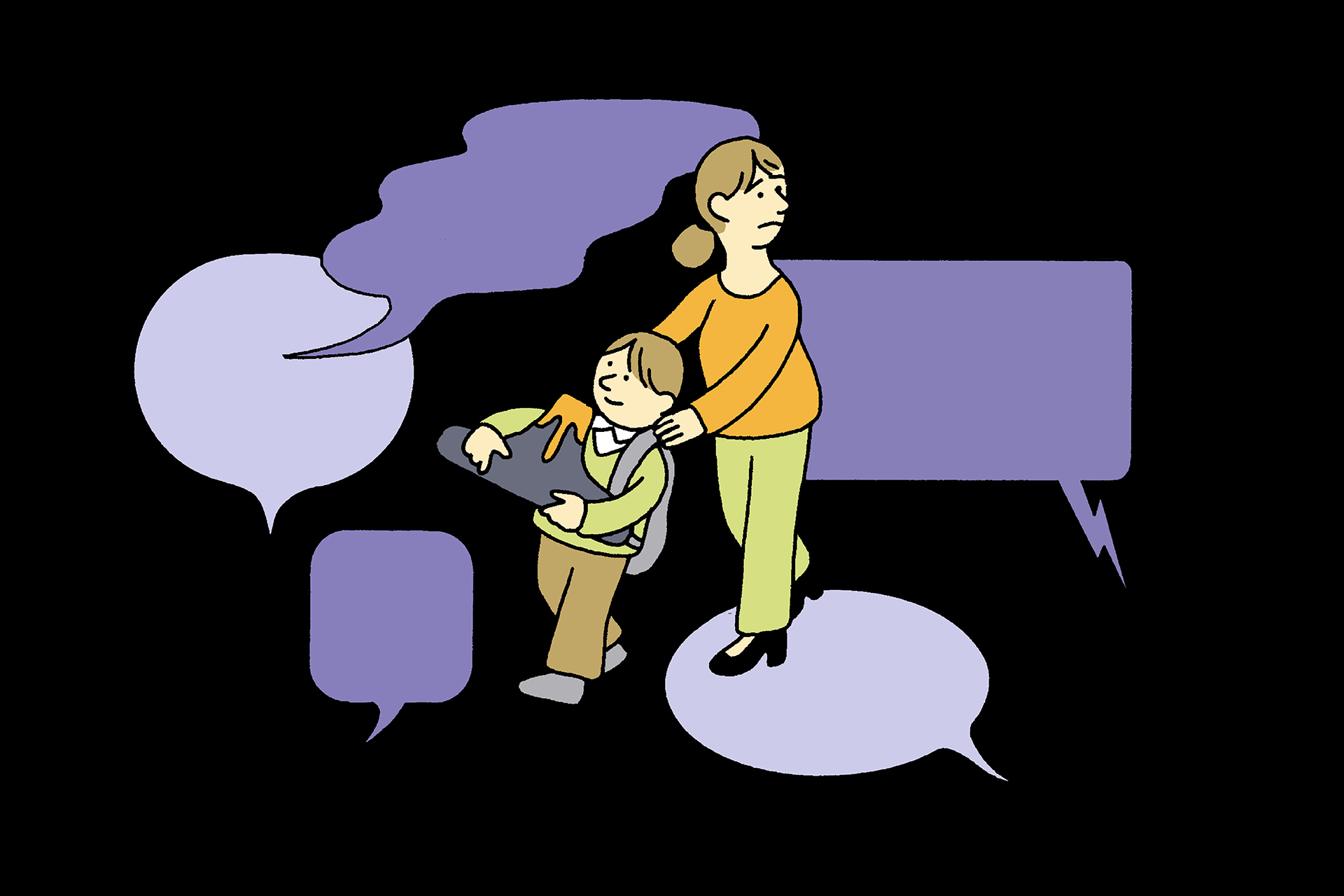
Sigal’s column is characteristically smart, and I’d encourage anyone wrestling with the decision about how to educate their child to read it. But as a parent of an 8-year-old in a Brooklyn public school, what strikes me most about the private-vs.-public debate isn’t the ethical dimension — it’s the sheer vertigo of not knowing.
Something I realized fairly soon as a parent is that we get exactly one shot at it. There is no control group. You can’t run your kid through public school, rewind, try private, and then compare outcomes at age 30. You’re forced to make what could be a massive, consequential decision with radically incomplete information.
That uncertainty gnaws at me. When I was growing up in the 1980s, the basic formula for life success was still legible: get good grades, go to a good college, get a good job. That pathway still exists, but it’s fraying in ways that make school choice, like so much else today, feel even more like a shot in the dark. What skills will actually matter in 15 years? Will the curriculum your kid learns in third grade have any bearing on a labor market being reshaped by AI? Will the network your child builds matter less — or even more?
I’m supposed to be a futurist, and I have no idea. I suppose it’s some comfort that neither does anyone else, though plenty of people will charge you $40,000 a year in tuition to pretend they do.
The research Sigal cites is genuinely reassuring — family background matters more than which building your kid sits in. But knowing that intellectually doesn’t silence the 3 am voice that whispers: What if you’re getting this wrong?
This is such Relatable Content! How are you supposed to set up your child’s “one wild and precious life,” as Mary Oliver put it, when life offers you no clear instruction manual and you only get one try?
This is hard in the most stable of times. And it feels even harder now, when so many parents are wondering how they can possibly educate their kids in a way that’ll prepare them for AI’s disruptions to the labor market and society overall.
You’re right about two things. First, the old formula for life success — good grades at a good school will get you a good job — can be counted on less and less. And second, parents now have to make decisions about their kids’ education with radically incomplete information.
Uncertainty is a very hard thing to hold, especially at 3 am.
So at this point, I could try to reassure you by telling you the concrete things you can do to benefit your individual child. I could reiterate what many AI executives and early adopters have told their own kids: Cultivate soft skills (like listening, empathy, and accountability) and metacognitive skills (like critical thinking, experimentation, and flexibility).
I could also reiterate something I’ve said before: A good education is about much more than ensuring job security. As Aristotle argued back in Ancient Greece, it’s about cultivating all the character virtues that make for a flourishing life — honesty, courage, justice, and especially phronesis or good judgment (learning to discern the morally salient features of a given situation so you can make a judgment call that’s well-attuned to that unique situation). The advent of AI makes a virtue like phronesis more relevant than ever, because your kid will need to be able to wisely discern how to make use of emerging technologies — and how not to.
But the thing about the virtues is, you build them up through practice. If your kid doesn’t have the opportunity to encounter friction that forces them to practice reasoning and deliberating, they’ll have a very hard time developing good judgment.
And AI tends to remove friction. It makes things fast and easy, which can be handy in the short term, but can lead to intellectual — and moral — deskilling in the long term. As AI use pervades society more and more, I think the most unusual kind of person will be one who has become neither brain-dulled nor virtue-dulled by deferring to AI models without using their own cognitive muscles first.
So if your goal is to make your kid stand out in a way that just might give them a leg-up when they’re grown, I’d say: Make sure that they build those muscles while they’re young, and for the love of god, keep exercising them. Even if this doesn’t give them full security in the labor market, it’ll help them live a more flourishing life writ large.
The nice thing about this advice for you, as a parent struggling to know what to do for your kid, is that it means you don’t have to do anything wildly different from what’s been done in the past! The benefits of a classic humanities or liberal-arts education are still among the very best you can give your child.
But.
While I think all the advice I’ve mentioned so far is reasonable on the individual level, I’d argue the very best advice would be to question the entire premise that focusing on that individual level will be an effective way to ensure much of anything for your child’s future.
On the current trajectory, it seems all too likely that we’re heading toward a future of “gradual disempowerment,” as some AI researchers put it. The basic idea is that as AI becomes a cheaper alternative to human labor in most jobs, the economic pressure to sideline humans will become incredibly hard to resist. Historically, citizens in democratic states have enjoyed a bunch of rights and protections because states needed us — we provide the labor that makes everything run, from the economy to the military.
But when AI provides the labor and the state becomes less dependent on us, it doesn’t have to pay so much attention to our demands. Worse, any state that does continue taking care of human workers might find itself at a competitive disadvantage against others that don’t. And so the forces that have traditionally kept governments accountable to their citizens gradually erode, and we end up deeply disempowered.
Under these conditions, focusing on the object-level question of “what skills should I teach my individual child?” is a bit like trying to protect your kid from climate change by buying them a better sunhat.
Instead, it makes more sense to focus on the structural problem, which demands political engagement and collective organizing. If you want your kid to have a job as an adult, then teaching them to be an effective citizen and advocate — and doing that work yourself right now — probably matters more than any particular school subject they will study. This can take many concrete forms: organizing with your labor union, supporting advocacy groups that push the government to make tech equitable and accountable, voting for politicians who share your vision, and spreading compelling counter-narratives to the fanciful stories that AI companies are selling the public.
I know that accepting the limits of what we can guarantee by focusing on the personal level is a tough pill to swallow. We live in a culture that conditions us to think in terms of the atomized individual and valorizes being self-sufficient and self-directed (see Silicon Valley’s current obsession with being “high agency.”) But my own life has taught me how fragile that model is.
I grew up in a family on welfare, so financial and professional security feels very salient to me. I tend to gravitate towards a “hoarding” mentality. That is, faced with my own 3 am anxieties, I spent years trying to maintain a sense of control by telling myself that if I burnish my educational credentials, work hard at my job, and save enough money, I’ll be okay.
But for me, that illusion of control came crashing down a decade ago when I developed a chronic illness. For a while, it was so intense that I could barely walk. And I was shattered to discover that nothing I’d hoarded — my education, my job, my savings — could help me. Even worse than the physical pain was the emotional pain of feeling alone: My doctors shunted me from specialist to specialist, and my friends and family didn’t realize that I needed more support. I was so used to the idea that I was self-sufficient, in my castle buttressed by the achievements I’d hoarded, that I didn’t think to ask.
Recently, a friend of mine also developed a chronic illness. But unlike me, she’d spent many years cultivating a community of extremely tight-knit friends. They’re the sort of group that talks a lot about solidarity and mutual aid. And they walk the talk. I’ve watched how my friend, buoyed by all the meals and parties and other ministrations they lavish on her, has been able to manage her physical challenges with so much less fear and so much more security than me. My castle isolated me. Her refusal to build one gave her true safety.
As AI disrupts the labor market, I’m trying to move myself from the hoarding model to the solidarity model.
And I wonder if it might serve you and your family well, too. The problem we’re all about to face together is structural, not individual. So the benefits you can offer your child on the individual level are, it pains me to say, fairly limited. But if you focus on political engagement and collective organizing that could actually make some difference to the structural dynamic — and teach your child to ask structural questions and be civically engaged as well — you might be able to sleep a little better at night.